
How to Recognize Quality Matcha | 7 Essential Criteria
Faced with the explosion of the matcha market in France, it is becoming increasingly difficult to navigate. Among the numerous brands emerging and prices varying tenfold, how can you be sure to choose authentic, quality matcha?
At Maido Matcha, after years spent in Japan tasting and analyzing hundreds of different matchas, we have identified the 7 infallible criteria for recognizing exceptional matcha. In this complete guide, we reveal all our secrets for becoming an expert and never making a mistake in your purchase again.
Why is matcha quality so important?
The quality of matcha determines not only its taste, but also its nutritional benefits and its impact on your tasting experience. Poor quality matcha can be bitter, grainy, and quickly lose its antioxidant properties. Conversely, premium matcha will offer you an incomparable taste experience and retain all its benefits.
Criterion #1: Color, indicator of freshness
Jade green, sign of excellence
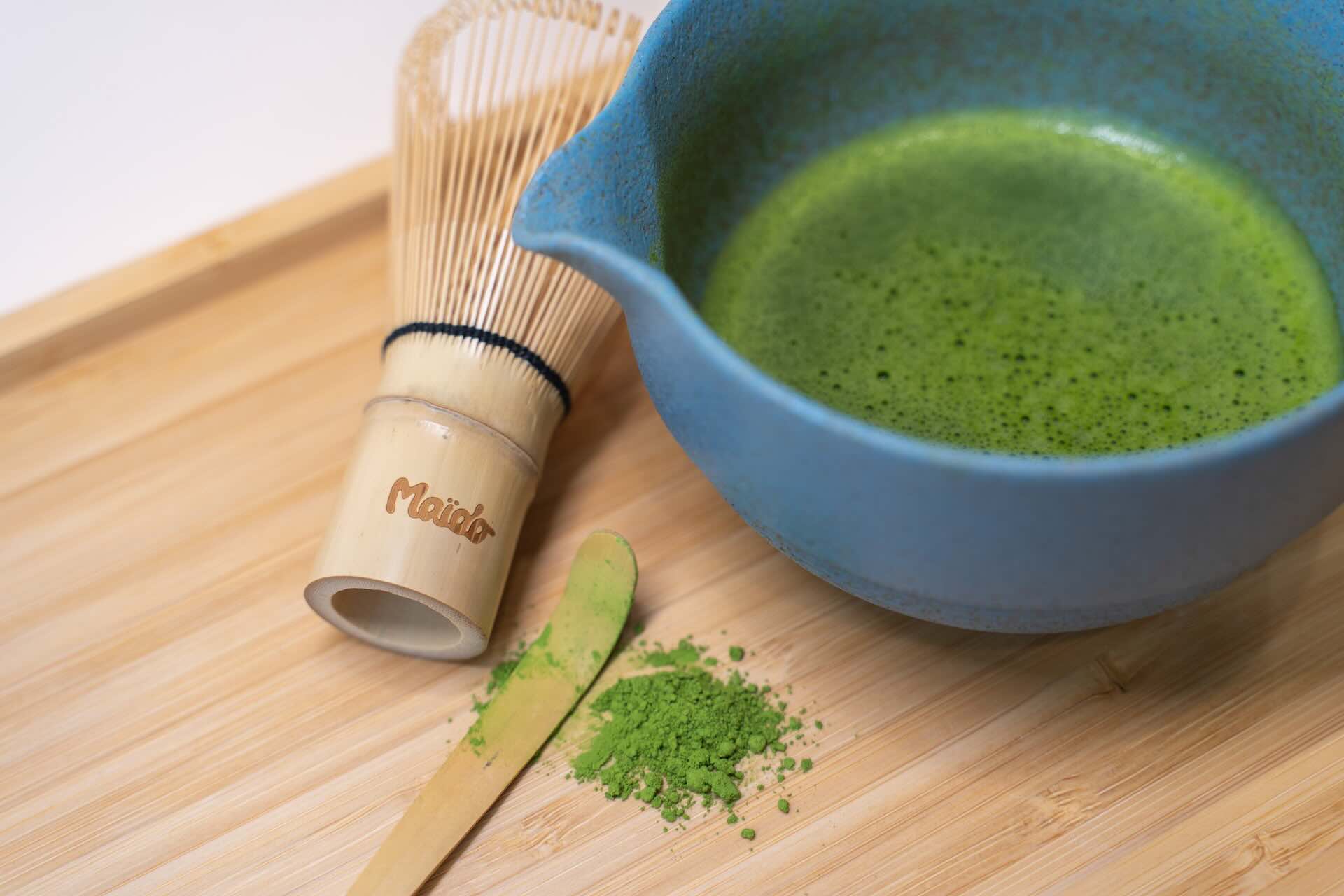
Superior quality matcha has a bright jade green color, almost fluorescent. This particular hue comes from the chlorophyll concentrated in the leaves shaded for several weeks before harvest.
Colors to avoid
Beware of matchas that are:
- Dull or yellowish green: sign of aging or poor storage conditions
- Green-brown: advanced oxidation, the matcha has lost its properties
- Uneven color: mixture of different qualities or irregular grinding

💡 Maido Tip: Observe your matcha in natural light. Premium matcha like our Mei-san, Daichi-san or Kaori-san retains its vibrant color even after opening, thanks to our importation in small quantities to guarantee optimal freshness.
Criterion #2: Texture, absolute fineness
Ultra-fine powder = superior quality
Excellent matcha must have the texture of the finest makeup powder. Pass it between your fingers: it must be silky, without any perceptible grain.
How to test fineness
- Pour a little matcha into your palm
- Rub gently with your index finger
- Quality matcha should not show any roughness
This extreme fineness results from traditional stone grinding, a long and costly process that preserves aromas and prevents the powder from heating up. This is what we use at Maido Matcha in particular!
Criterion #3: Aroma, signature of terroir
The scents of premium matcha
Exceptional matcha releases a complex aromatic bouquet:
- Fresh vegetal notes (cut grass, young spinach)
- Subtle marine nuances (nori seaweed)
- Sometimes sweet touches (chestnut, walnut)
Smells that alert
Avoid matcha that smells like:
- Dry hay or straw
- Fish or overly pronounced seaweed
- Mold or humidity
- Nothing at all (loss of aromas)
Criterion #4: Taste, the test of truth
The perfect balance: umami and sweetness
Quality matcha offers a subtle balance between:
- Umami: this round and persistent flavor, the fifth recognized taste
- Natural sweetness: from amino acids, notably L-theanine
- Slight astringency: that awakens the palate without aggression
Prepare an optimal taste test
To properly evaluate matcha:
- Use 2g of matcha for 60ml of water at 70°C
- Whisk vigorously until you obtain fine foam
- Taste immediately
However, there is a misconception we want to address: no, if you have a bit of bitterness, it does not necessarily mean it is poor quality matcha. Moreover, we often hear "Oh, I went to Japan and the matcha was awful!" Well no, it might have been very good... but it just was not to your taste? Indeed, bitterness (if it is not too pronounced and almost burns your throat during tasting) is not necessarily a sign of poor quality. Matcha is much more complex than that.
Criterion #5: Origin, guarantee of authenticity
Regions of excellence in Japan
The best matchas come from specific regions:
- Uji (Kyoto): historical cradle of matcha, exceptional terroir
- Mie: traditional region renowned for its excellent teas
- Kagoshima: modern quality production, on volcanic lands in southern Japan
Verify traceability
Quality matcha should mention:
- Its precise production region
- The cultivars used
- The harvest number: first harvest, second, etc.
At Maido Matcha, our three references come from a family producer whose expertise dates back to the mid-19th century. They have several fields across Japan, allowing them to maintain a certain balance over the years by creating what are called "blends," a mixture of several cultivars to keep an identical taste over time.
Criterion #6: Price, truly a reflection of quality?
Understanding price differences
The price of matcha depends on many factors:
- Leaf quality: only young buds for premium matcha
- Cultivation method: prolonged shading, meticulous care, hand-picked leaves
- Production process: steaming, drying, traditional grinding
- Freshness: frequent imports in small quantities from Japan to France
Indicative price ranges
- Culinary matcha: 15-30€ per 100g
- Standard matcha: 30-60€ per 100g
- Premium matcha: 60-120€ per 100g
- Ceremonial matcha: 120€+ per 100g
⚠️ Warning: A high price does not always guarantee quality, but matcha sold too cheaply often hides quality compromises. There are also many matchas from China that are much cheaper. They are not always of poor quality, far from it, but some brands try not to indicate the origin to avoid a bad image.
Criterion #7: Packaging and storage
Protecting matcha from its enemies
Matcha is extremely sensitive to:
- Light: destroys chlorophyll and antioxidants
- Air: causes oxidation
- Humidity: promotes degradation
- Heat: accelerates aroma loss
Optimal packaging must be
- Opaque: protects from light
- Airtight: preserves from oxidation
- Small size: limits air exposure with each opening
- With zip closure if it is a pouch: facilitates daily storage
How to properly store your premium matcha?
Once opened, your matcha should be stored:
- In the refrigerator in its original packaging if where you live is very humid (otherwise, it is not necessary)
- Well closed after each use
- To be consumed within 8 to 12 weeks for optimal quality after opening

Mistakes to avoid when purchasing
Trap #1: Confusing matcha with powdered green tea
Some products pass as matcha when they are simply ground green tea, without the specific shading process.
Trap #2: Relying solely on marketing
Terms like "authentic Japanese matcha" do not guarantee quality. Focus on objective criteria: origin, type of matcha, possibly the cultivar, etc.
Trap #3: Neglecting the production date
Matcha quickly loses its qualities. Always favor recent productions. At Maido, this is always the case! Before each delivery to France, our matchas are freshly ground in Japan by our producer before being put in cans. Thanks to this process, the matcha is always fresh!
Our recommendations at Maido Matcha
At Maido Matcha, we have developed three references that respect all these quality criteria:

Mei-san, our introductory matcha, offers real smoothness, perfect for discovering the true flavors of ceremonial matcha.

Daichi-san, for lovers of authentic flavors, reveals all the complexity of traditional matcha with pronounced vegetal notes.

Kaori-san, the perfect balance between smoothness and character, enhances your culinary creations while also being enjoyed plain. This is a Premium culinary matcha that can also be drunk as a latte if you like rather strong matcha.
Conclusion: Become a matcha expert
Recognizing quality matcha is no longer a mystery for you! By applying these 7 essential criteria - color, texture, aroma, taste, origin, price and storage, you can now choose your matcha with confidence.
Remember that excellent matcha is above all a complete sensory experience that awakens all your senses. Do not hesitate to take the time to taste it to really appreciate all the nuances of this exceptional tea.
At Maido Matcha, we make it a point of honor to respect each of these criteria, from selection at our family producer to delivery to your mailbox. Because we believe you deserve the best of Japanese matcha.