Our Tips

3 bienfaits du matcha pendant les règles

3 Benefits of Matcha During Menstruation

Periods are never quite the same from one month to the next, but they often come with the same reality: fatigue, mood swings, cramps, or simply the desire to slow down. At Maïdo Matcha, we believe that every woman deserves a little pampering during this time. Without making miracle promises, matcha can become an everyday ally: a comforting drink, a moment for oneself, and some natural benefits to better get through these few days. In this article, we share 3 simple reasons to integrate matcha into your routine during your period. Matcha, what is it again? Before diving into its benefits, a quick reminder for newcomers: matcha is a finely ground Japanese green tea powder that is mixed with hot water or milk. Unlike infused tea, here you consume the entire leaf, making it a drink concentrated in antioxidants, vitamins, and active ingredients. In terms of effect, matcha contains caffeine, but also L-theanine, an amino acid known for its relaxing properties. The result? More stable energy, less nervousness, making it an ideal drink to incorporate into your wellness routine, especially during your period. Benefit #1: An energy boost without the jitters During your period, it's common to feel more tired, as if your energy is draining throughout the day. This is normal: the body is working, eliminating, and adapting. Rather than rushing for a strong coffee that can cause energy spikes followed by sudden crashes, matcha offers a much gentler alternative. Thanks to its natural caffeine content (called theine in tea) and especially the presence of L-theanine, it releases progressive and stable energy. It's like your body is supported without being overstimulated. Unlike coffee, matcha doesn't agitate: it stimulates while calming. You feel more awake, clearer, without being nervous. Perfect for those days when you want to stay focused, but without excess. And as a bonus, this feeling of fluid energy is often accompanied by a better mood. A real little benevolent recharge. Benefit #2: An ally against stress and mood swings Let's be honest: periods can sometimes be an emotional rollercoaster. A wrong word, accumulating fatigue, hypersensitivity that comes on without warning... What if a cup of matcha could help smooth things out a bit? L-theanine, naturally present in matcha, promotes a calmer and more relaxed state of mind. It acts on brain waves, favoring those associated with relaxation and concentration (the famous alpha waves). It's not a spectacular effect, but it's subtle and effective: a gentle calming, a feeling of inner balance. The simple act of taking a moment for yourself, preparing your matcha with your whisk, anchoring yourself in a comforting little ritual also helps create a space of calm. Drinking your matcha then becomes a gesture of recentering. A "sigh of relief" in the hormonal storm.   Benefit #3: Antioxidants to support the body During your period, our body goes through a phase of elimination, regulation, and sometimes inflammation. Menstrual pain is often linked to uterine contractions and inflammatory processes. This is where matcha, with its exceptional concentration of catechins (especially EGCG), comes into play. These powerful antioxidants help reduce inflammation and protect cells from oxidative stress. This support does not replace medical treatment, of course, but it acts as a small natural reinforcement to accompany the body. In addition, matcha's antioxidants contribute to the proper functioning of the immune system, which can be more vulnerable during this period. Drinking matcha is therefore both supporting your defenses, helping to soothe tensions, and making a fundamental gesture for your general well-being. A bit like telling your body: "I'm listening, I'm taking care of you."   How to integrate it into your routine during your period? No need to completely change your habits to enjoy the benefits of matcha. The idea is to gently integrate it, like a little ritual for yourself during this more sensitive period of your cycle. In the morning, you can replace coffee with a bowl of traditional matcha, whisked with hot water: it awakens gently, supports energy, and encourages starting the day more calmly. 👉 If you are rather sensitive to strong flavors or are new to matcha, Mei-san is perfect during your period: gentle, without bitterness, and ideal for times when the body craves tenderness.👉 If, on the contrary, you like bolder flavors, or are looking for a more intense matcha to stay on track during busy days, Daichi-san will offer you character... without aggression. For those who like richer drinks, a matcha latte made with plant-based milk (oat, almond, or coconut) becomes a real cozy moment. It's also a great alternative to an afternoon sweet snack: comforting, but without causing an energy crash. Matcha can also be integrated into your wellness routine creatively: added to a smoothie, a chia pudding, or even pancake batter if you crave sweetness. But beyond the recipe, it's the intention that counts: taking a few minutes for yourself, slowing down, breathing, reconnecting. Use this moment to listen to your body: what does it need today? A boost, a warm hug, a moment of calm? Matcha adapts. It doesn't just nourish: it accompanies. And during your period, that might be all you need. Discover our matcha               Drinking matcha during your period won't solve everything, but it can make a real difference. A little more energy, a little less stress, a feeling of gentle support: that's what Maïdo Matcha wants to offer. Whether you are a regular matcha drinker or just starting, this drink can naturally fit into your month, like a small wellness appointment. Because taking care of yourself sometimes starts with a simple sip.
Pana Cotta au Matcha : La recette Italienne revisitée à la Japonaise

Matcha Panna Cotta: The Italian Recipe Revisited Japanese-Style

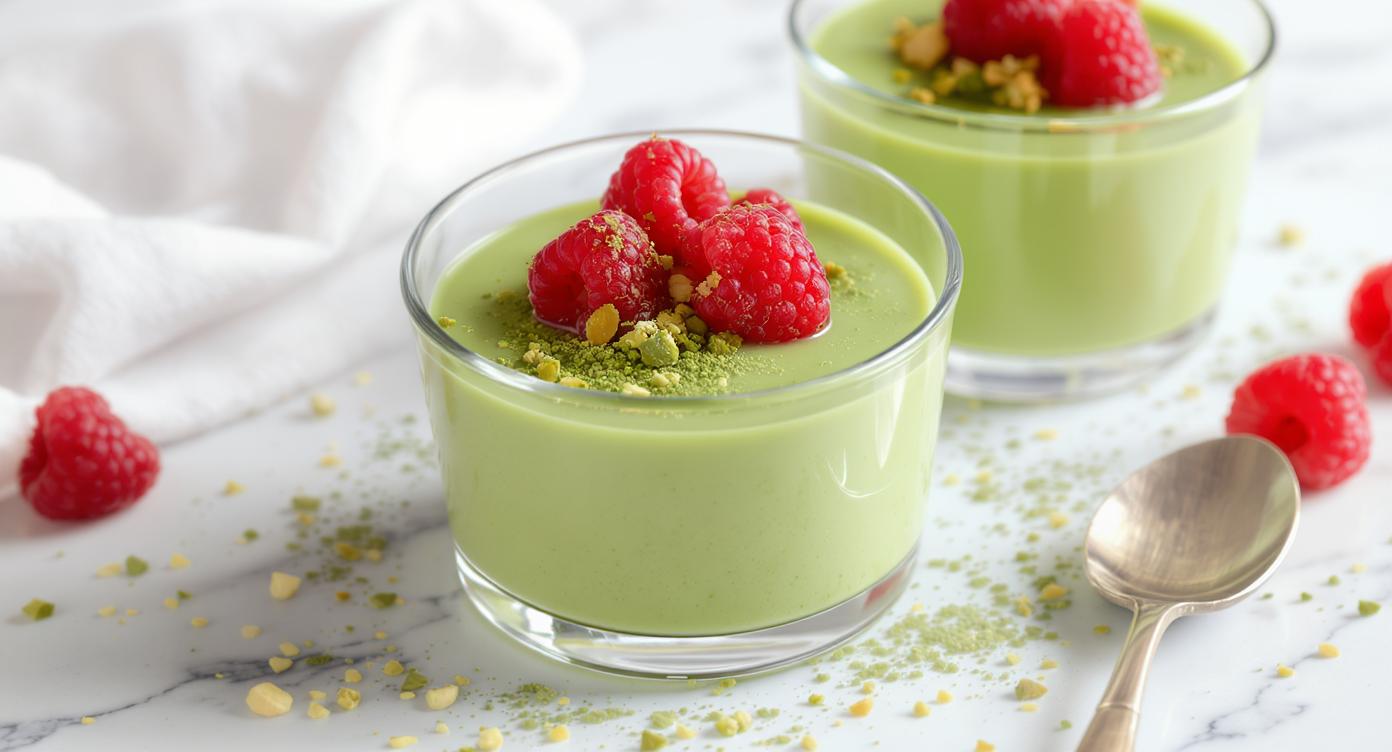
The meeting between Italian delicacy and Japanese elegance gives birth to an exceptional dessert: matcha panna cotta. This fusion creation sublimes the characteristic smoothness of traditional panna cotta with the vegetal notes and enchanting jade color of matcha. Discover how to make this refined dessert that will impress your guests and awaken your taste buds. Matcha Panna Cotta Ingredients for 6 portions (6 people) Ingredients For the panna cotta 500ml heavy cream (35% fat content) 80g white sugar 2 tablespoons of Kaori-san matcha from Maido Matcha 2 gelatin sheets (or 1 packet of powdered gelatin) 100ml whole milk 1 pinch of salt For decoration (optional) A few fresh raspberries or blueberries Crushed pistachios Fresh mint White chocolate shavings (for extra indulgence!) Necessary equipment 6 ramekins or glasses Thick-bottomed saucepan Whisk Fine sieve Bowl for gelatin Wooden spoon Discover our premium Kaori-san matcha Buy Kaori-san matcha → Preparing Matcha Panna Cotta: All the Steps Step 1: Preparing the gelatin Soak the gelatin sheets in a bowl of cold water for 10 minutes. They should soften completely. If using powdered gelatin, follow the manufacturer's instructions. Step 2: Preparing the matcha mixture In a small bowl, carefully sift the matcha powder to eliminate all lumps. Gradually add 3 tablespoons of lukewarm milk while whisking vigorously until you obtain a smooth and homogeneous paste. This step is crucial to avoid lumps in your panna cotta. Step 3: Heating the cream In a thick-bottomed saucepan, pour the heavy cream and remaining milk. Add the sugar and pinch of salt. Heat over low heat, stirring regularly until the sugar is completely dissolved. The preparation should not boil, just simmer slightly. Step 4: Incorporating the matcha Remove the saucepan from heat. Gently incorporate the matcha mixture while whisking constantly to avoid lump formation. Pass the mixture through a fine sieve if necessary to obtain a perfectly smooth texture. Step 5: Adding the gelatin Gently squeeze the gelatin sheets and incorporate them into the still-warm preparation. Mix until completely dissolved. Let cool for 10 minutes, stirring occasionally. Step 6: Molding and refrigeration Distribute the preparation into your ramekins or glasses. Cover with plastic wrap and place in the refrigerator for at least 4 hours, ideally overnight. If desired, you can also decorate your dessert further with other elements: raspberries, pistachios, white chocolate... it's up to you depending on your preferences! Buy Kaori-san to prepare the best Panna Cotta! Our Tips for Success and Storage Matcha choice Matcha quality is crucial for the final taste. Opt for superior grade culinary matcha like the one offered by Maido Matcha. Ceremonial matcha can also be used for a more refined flavor, although more expensive. Anti-lump technique The secret to smooth matcha panna cotta lies in matcha preparation. Always sift the powder and first create a paste with a little liquid before incorporating the rest. Matcha dosage Start with 2 tablespoons for 500ml of cream. You can adjust according to your preferences: less for a milder flavor, more for lovers of pronounced taste. Storage Matcha panna cotta keeps for up to 3 days in the refrigerator, covered with plastic wrap. Conclusion Matcha panna cotta represents the perfect fusion between Italian desserts and Japanese refinement. Matcha panna cotta adapts to all occasions, from dinner with friends to festive meals, bringing a touch of originality and sophistication to your desserts. Don't hesitate to personalize this recipe according to your tastes and explore the many possible variations.
Recette : Préparer le meilleur matcha latte à la maison

Best Matcha Latte Recipe | Easy Homemade Guide

The matcha latte is a delicious and comforting beverage, perfect when hot in winter and super refreshing during summer. This blend of matcha powder, milk, and hot water offers a smooth taste experience while providing numerous health benefits. Preparing a matcha latte at home is not only simple but also allows you to customize the recipe according to your preferences. In this article, discover how to make the best matcha latte at home, step by step. 🍵 Necessary Ingredients For a Classic Matcha Latte To prepare a classic matcha latte, you will need the following ingredients: 1 to 2 teaspoons of high-quality matcha powder 240 ml of milk (cow, almond, soy, etc.) 60 ml of hot water (not boiling) 1 to 2 teaspoons of honey or maple syrup (optional) For Flavor Variations It's possible to add extra flavors to your matcha latte. Here are some ideas: A pinch of cinnamon or nutmeg for a spicy touch. Vanilla extract or syrup for a sweet and aromatic taste. Coconut milk for a creamy texture and tropical flavor. In addition to these variations, you can also experiment with fruit infusions. For example, adding a bit of raspberry or strawberry puree can bring a beautiful color and a tangy note that contrasts nicely with matcha's bitterness. Similarly, oat milk, increasingly popular, offers a natural sweetness that can enrich your beverage while giving it a velvety texture. For chocolate lovers, why not try a white chocolate matcha latte? Simply incorporate a few pieces of melted white chocolate into your milk and matcha mixture. This creates a luxurious and indulgent beverage, perfect for cold days or as a little treat any time of day. Remember that the quality of ingredients plays an essential role in the final taste of your latte, so always choose fresh, high-quality products. Preparation Steps 1. Prepare the Matcha Start by sifting the matcha powder into a bowl. This step is crucial to avoid lumps and ensure a smooth texture. Use a bamboo whisk (chasen) or a small whisk to mix the matcha with hot water. Gently pour the hot water over the matcha and whisk vigorously in "M" motions (like Maïdo... 😉) until you achieve a frothy consistency. 💡 Our Tip: Don't forget to soak the whisk bristles in hot water before use to soften the bamboo. Additionally, we recommend using a bowl with a smooth bottom to avoid damaging the delicate whisk bristles during friction while preparing. 2. Heat the Milk In a saucepan, heat the milk of your choice over medium heat. Avoid boiling it, as this could alter the taste. If you want a smooth foam, you can use a milk frother to create a light and airy texture. This will add an extra dimension to your matcha latte. 3. Mix and Serve Once the milk is heated and frothy, gently pour it into the bowl containing the matcha. Stir gently to mix the two ingredients well. If you opted for a sweetener, add it at this stage and mix again. Serve your matcha latte in a cup and, if desired, sprinkle a little matcha powder or cinnamon on top for decoration. 💡 Our Tip for an Iced Version: If you want to prepare your matcha latte iced, don't forget to put the ice cubes in the glass beforehand and pour the milk first, then add the matcha at the end. This will also make your matcha more beautiful for a perfect photo with the matcha blending into the milk as it falls to the bottom of the glass. Tips for a Perfect Matcha Latte Choosing the Right Matcha Powder The quality of matcha powder is essential for obtaining a flavorful latte. Opt for culinary grade matcha like Kaori-san, which is generally more affordable and perfectly suited for these beverages. For a more refined experience, try ceremonial grade matcha like Mei-san or Daichi-san which offer a smoother flavor and more vibrant color. Discover our ceremonial matcha teas Experiment with Milks The choice of milk for your matcha can greatly influence the taste and texture of your matcha latte. Plant-based milks like almond or soy milk bring a unique flavor, while whole milk offers creamy richness. Don't hesitate to experiment with different types of milk to find the one that suits you best. Customize Your Latte The beauty of matcha latte lies in its versatility. Add spices, flavored syrups, or even superfoods like spirulina to enrich your beverage. Each cup can be a new taste adventure, so let your creativity run free. Be careful though, a matcha with many additives like syrup or cream can quickly increase in calories. By following these simple steps and experimenting with ingredients, everyone can create their own perfect matcha latte. Whether to start the day or for a comforting break, matcha latte is an excellent option to integrate into your daily routine. So, what are you waiting for? Get your matcha powder and start preparing this delicious beverage today. Enjoy the benefits of matcha while treating yourself to a moment of sweetness and pleasure.
Combien y-a-t-il de calories dans le thé matcha ?

How Many Calories in Matcha Tea? Complete Guide

Matcha tea has become a popular beverage worldwide, prized not only for its unique taste but also for its numerous health benefits. However, a common question arises: how many calories does matcha tea actually contain? This article explores this question in detail while examining the various factors that can influence the caloric content of this beverage. What is matcha tea? Matcha tea is a type of powdered green tea originating from Japan. Unlike traditional teas, where the leaves are steeped in water, matcha is made from finely ground tea leaves. This means that when you consume matcha, you also ingest the leaves themselves, which increases the concentration of nutrients. The cultivation process for matcha is also unique. Tea plants are shaded for several weeks before harvest, which increases the chlorophyll and amino acid content. This cultivation method contributes to matcha's rich umami flavor, as well as its antioxidant properties. In addition to its nutritional benefits, matcha is also renowned for its beneficial effects on concentration and mental clarity. Thanks to the presence of L-theanine, an amino acid that promotes relaxation without inducing drowsiness, matcha can help reduce stress while increasing alertness. This is why it is often consumed by students and professionals seeking a cognitive boost. Moreover, matcha has become a popular ingredient in many modern recipes, ranging from smoothies to desserts. Its vibrant color and distinctive flavor add a unique touch to dishes while offering a healthy alternative to refined sugars. Whether as a latte, ice cream, or even cakes, matcha continues to delight tea lovers and chefs around the world. The caloric content of matcha tea Calories in a standard serving In general, a standard serving of matcha tea, which is about 1 gram of powder, contains approximately 3 calories. This amount may vary slightly depending on the quality of the matcha and the preparation method. It's important to note that these calories come primarily from the proteins and carbohydrates present in the tea powder. For a cup of matcha tea prepared with 1 gram of powder and 240 ml of water, the total caloric content remains low, making it an ideal beverage for those monitoring their caloric intake. In comparison, a cup of black coffee also contains very few calories, but matcha offers additional nutritional benefits. Comparison with other teas When comparing matcha to other types of teas, such as black tea or traditional green tea, it appears that matcha is relatively low in calories. For example, a cup of black tea may contain up to 2 calories, while a cup of steeped green tea may also contain about 2 calories. However, matcha stands out for its concentration of antioxidants and nutrients. It's also interesting to note that matcha can have a satiating effect, meaning it can help reduce hunger sensations, which can be beneficial for those looking to manage their weight. Factors influencing caloric content Preparation and added ingredients The caloric content of matcha tea can vary depending on how it's prepared. For example, if milk or sweeteners are added, this will significantly increase the number of calories. A matcha latte, for instance, can contain between 100 and 300 calories, depending on the type of milk used and the amount of sugar added. For those who wish to enjoy the benefits of matcha while keeping an eye on their caloric intake, it's recommended to consume it simply with hot water. This allows you to benefit from all its nutrients without adding superfluous calories. Matcha quality The quality of matcha can also influence its caloric content. High-quality matcha varieties, often used in tea ceremonies, may have a slightly different nutritional composition than cheaper varieties. In general, better quality matcha will contain more nutrients and antioxidants, but the number of calories will remain relatively constant. Discover our ceremonial matcha teas It is therefore essential to choose good quality matcha to maximize health benefits while keeping caloric intake low. Calories can vary depending on the type of preparation To give you an idea, here is the top 10 most popular matcha beverages and associated calories for reference. Note that this is obviously indicative and may vary depending on the brand of milk used or additional additions like syrup. Rank Beverage Calories Portion 💡 Notes 1️⃣ Traditional matcha 3-5 kcal 1 cup (240ml) Zero sugar, maximum benefits 2️⃣ Matcha latte with skim milk 95-120 kcal 1 cup (240ml) Light and protein-rich option 3️⃣ Matcha latte with oat milk 110-140 kcal 1 cup (240ml) Creamy and plant-based 4️⃣ Matcha latte with almond milk 80-100 kcal 1 cup (240ml) Low in calories, subtle taste 5️⃣ Matcha latte with whole milk 140-170 kcal 1 cup (240ml) Smooth and satisfying 6️⃣ Matcha latte with coconut milk 120-150 kcal 1 cup (240ml) Exotic and naturally sweet 7️⃣ Matcha bubble tea 180-250 kcal 1 cup (350ml) With tapioca pearls 8️⃣ Iced matcha frappe 200-280 kcal 1 cup (350ml) With crushed ice and sweetener 9️⃣ Matcha latte + vanilla syrup 190-230 kcal 1 cup (240ml) Indulgent and aromatic 🔟 Matcha frappuccino 320-450 kcal 1 large cup (470ml) Indulgent coffee-shop version 🏆 The calorie verdict ✅ Low-calorie champions: Traditional matcha: 3-5 kcal ⭐⭐⭐⭐⭐ Matcha + almond milk: 85 kcal ⭐⭐⭐⭐ Matcha + skim milk: 95 kcal ⭐⭐⭐⭐ ⚠️ To be consumed in moderation: Matcha frappuccino: 320-450 kcal Matcha with cream: 200+ kcal Very sweet versions: 250+ kcal 💡Tips to reduce calories: Replace whole milk with almond milk Use stevia instead of sugar Reduce syrup quantity by half Add cinnamon for natural sweet flavor Conclusion In summary, matcha tea is a low-calorie beverage that offers a multitude of health benefits. With approximately 3 calories per standard serving, it constitutes an excellent option for those looking to maintain a healthy weight while enjoying a beverage rich in antioxidants and nutrients. Whether as a simple infusion or incorporated into various recipes, matcha can be easily integrated into a balanced diet. By choosing quality ingredients and avoiding caloric additions, it's possible to savor this delicious beverage while benefiting from its positive health effects.
Comment bien préparer son fouet à matcha avant la première utilisation ?

How to properly prepare your matcha whisk before first use?

At Maïdo Matcha, we know that to prepare good matcha... you need good accessories! So naturally, you'll need a whisk! The best? A traditional handmade bamboo whisk (called "chasen" in Japanese), like the one we offer. Before using it for the first time, it is crucial to prepare it properly. This article will guide you through the necessary steps to ensure your matcha whisk is ready to use and won't wear out too quickly! Why is it important to prepare your matcha whisk? The matcha whisk is a delicate tool, made from bamboo. Its proper preparation not only preserves its structure, but also optimizes the quality of the foam obtained when preparing matcha. A poorly prepared whisk can lead to uneven infusion and an unpleasant texture. Preserving the whisk's quality A good quality matcha whisk is an investment. By preparing it correctly, you ensure its longevity. A well-maintained whisk will resist wear and allow you to fully enjoy your matcha preparation sessions. Optimizing matcha preparation A well-prepared whisk allows you to obtain a light and airy foam, essential to fully appreciate matcha's flavor. Quality foam not only improves your beverage's aesthetics, but also its taste. A properly prepared whisk ensures better incorporation of the powder into hot water. Moreover, preparing the matcha whisk is not limited to its maintenance. It is also crucial to rinse it with hot water before each use to soften the bamboo bristles (we advise putting water at 80°C in a glass and soaking only the bristles to relax them). This prevents the whisk from breaking or deforming during the whisking process. By taking the time to properly prepare your whisk, you ensure that each cup of matcha you prepare meets your expectations, both in terms of taste and presentation. Our tips to make your whisk last over time Finally, it's interesting to note that using a matcha whisk is an integral part of the Japanese tea ceremony, or "chanoyu." This tradition emphasizes harmony, respect and purity, and every gesture, including whisk preparation, is imbued with meaning. By integrating these practices into your matcha preparation routine, you're not just creating a delicious beverage, but also participating in an ancient art that values patience and attention to detail. What to do before the very first use Preparing your matcha whisk is a simple process, but one that requires attention. Here are the steps to follow to ensure optimal use the first time. 1. Inspect the whisk First of all, it's important to inspect your whisk. Check that there are no broken or damaged bamboo bristles. A whisk in good condition is essential for effective preparation. If you notice imperfections, it's best to replace it before using it. 2. Rinse the whisk To remove any impurities or manufacturing residue, gently rinse your whisk with hot water. Avoid using chemicals or detergents, as this could alter the taste of matcha. A simple rinse with clear water is sufficient to prepare the whisk. 3. Soak the whisk After rinsing, it's advisable to soak the lower part with the bristles of your whisk in hot water for about 10 to 15 minutes (⚠️ don't immerse the entire whisk, just the bristles that are still closed on themselves are enough!). This softens the bamboo and gives it optimal flexibility. A supple whisk is more effective at creating the desired foam. Which whisk is recommended for matcha beginners? For beginners, no need to break the bank! A whisk under €20 is generally more than sufficient. Simply choose a whisk that's 100% bamboo and made from a single piece. This is the case with our whisk at Maïdo Matcha, for example, offered at the price of €18.95! It's perfect for beginners and preparing your first smooth matcha. Discover our perfect whisk for beginners! Conclusion Preparing your matcha whisk before first use is an essential step to ensure an optimal preparation experience. By following these simple steps, you ensure not only the quality of your whisk, but also that of your matcha. A well-prepared and maintained whisk will allow you to fully savor this delicious green tea, while preserving the authenticity of Japanese tradition. Whether you're a novice or a matcha enthusiast, taking care of your whisk is an investment in your tasting pleasure. So don't hesitate to apply these tips and savor your matcha like a true connoisseur.
Matcha vs Café : Quelles sont les différences et lequel choisir ?

Matcha vs Coffee: Differences and Which to Choose

In the world of caffeinated beverages, matcha and coffee hold a special place. Each has its own followers, preparation rituals and effects on the body. But what are the real differences between these two popular drinks? This article explores their origins, nutritional properties, and helps you determine which one to choose according to your needs. Origins and composition: discovering matcha and coffee The ancient history of Japanese matcha Matcha, a finely ground green tea powder, has its roots in Japan, where it has been used for centuries in tea ceremonies. Its history dates back to the 12th century, when Buddhist monks began importing it from China. This tea is shade-grown, which increases its chlorophyll and amino acid content, giving it its vibrant color and unique umami taste. Over the years, matcha has evolved to become a symbol of Japanese culture. It is appreciated not only for its flavors, but also for its beneficial health properties. The tea ceremony, which showcases matcha, is an art that combines meditation and aesthetics, reinforcing its cultural importance. Tea masters, through their expertise, convey values of respect, tranquility and harmony, making each cup of matcha a spiritual and sensory experience. Moreover, matcha has become a prized ingredient in modern gastronomy, found in desserts, smoothies and even savory dishes, testifying to its versatility. The global journey of coffee and its varieties Coffee, on the other hand, has an equally fascinating history. Originally from Ethiopia, it quickly gained popularity around the world, becoming an essential beverage in many cultures. Coffee is grown in tropical regions, and its varieties, such as Arabica and Robusta, offer a diversity of flavors and aromas. Over the centuries, coffee has been associated with social rituals, like the literary cafés in Europe, where intellectuals gathered to discuss ideas. Today, coffee is not just a beverage, but also a symbol of conviviality and sharing, with a multitude of preparation methods ranging from espresso to filter coffee. Furthermore, coffee culture has spawned a true artisanal movement, where baristas strive to perfect each cup, focusing on bean origins and roasting techniques. Coffee festivals, celebrated in many regions of the world, highlight this growing passion for coffee, bringing together producers, enthusiasts and experts around tastings and workshops, strengthening the bonds between different coffee cultures. Nutritional properties and health effects Antioxidants and specific benefits of matcha Matcha is recognized for its richness in antioxidants, particularly catechins, which help fight free radicals in the body. These compounds are associated with a reduced risk of chronic diseases, such as heart disease and certain types of cancer. In addition, L-theanine, an amino acid present in matcha, promotes relaxation without causing drowsiness, making it an excellent choice for those seeking increased concentration. The benefits of matcha don't stop there. It is also known to boost metabolism and promote weight loss. By integrating matcha into a balanced diet, one can not only enjoy its unique flavor, but also its positive health effects. Indeed, studies have shown that regular matcha consumption can increase the fat burning rate, making it a valuable ally for those looking to maintain a healthy weight. Furthermore, matcha is often considered a superfood due to its ability to improve mental health, reducing stress and promoting a positive state of mind. Caffeine and coffee's impact on the body Coffee, for its part, is famous for its caffeine content, a stimulant that can improve alertness and concentration. A cup of coffee generally contains between 95 and 200 mg of caffeine, depending on the type and preparation method. This caffeine acts quickly on the central nervous system, providing an energy boost that can be particularly appreciated in the morning or during moments of fatigue. However, it is important to consume coffee in moderation. Excessive consumption can lead to adverse effects such as anxiety, insomnia, and heart palpitations. It is therefore advisable to pay attention to one's own caffeine tolerance and adjust consumption accordingly. Moreover, coffee is also rich in antioxidants, which can contribute to protecting cells against premature aging. Research has even suggested that moderate coffee consumption could be linked to a decreased risk of neurodegenerative diseases like Alzheimer's and Parkinson's disease, reinforcing its status as a beneficial beverage when consumed responsibly. Why ultimately choose matcha? Selection criteria: taste, energy and time of day The choice between matcha and coffee can depend on several criteria, notably taste, desired energy, and time of day. Matcha offers a smooth and herbaceous flavor, often described as umami, which may appeal to those who prefer a different taste experience. In terms of energy, matcha provides a smoother and more prolonged energy rise thanks to the presence of L-theanine, while coffee offers a quick boost but which tends to stop directly after this peak, which can then be problematic. For those looking to avoid caffeine spikes, matcha can be the ideal choice, especially in the middle of the day. Preparations and culinary uses of both beverages Both beverages offer a variety of preparations and culinary uses. Matcha can be used in recipes ranging from smoothies to pastries, bringing a vibrant color and unique flavor. Cooking enthusiasts can incorporate it into desserts like cakes, ice cream, and even sauces for an original touch. Coffee, meanwhile, is often used in dessert recipes, such as tiramisu or coffee cakes. It can also be integrated into creative beverages, like coffee cocktails or frappés. Furthermore, matcha is also prized for its health benefits. Rich in antioxidants, it helps combat oxidative stress and improve concentration. Many people choose to consume it in the morning to start the day with mental clarity. Matcha can also be prepared as a latte, mixed with almond or coconut milk, making it a delicious and creamy alternative to traditional coffee. Coffee, meanwhile, is often associated with social rituals, like coffee breaks at work or meetings with friends in cafés. Its preparation can vary from a simple espresso to more elaborate methods like siphon or cold brew. Each preparation method brings a different nuance to the taste, and coffee enthusiasts often enjoy exploring these various techniques to discover new flavors and aromas. _*]:min-w-0 !gap-3.5"> Comparison table: Matcha vs Coffee If we had to summarize this final match or duel, we could do it with this table: &]:odd:bg-bg-500/10" style="height: 19.5938px;"> Criteria 🍵 Matcha (1 cup) ☕ Coffee (1 cup) &]:odd:bg-bg-500/10" style="height: 19.5938px;"> Caffeine 60-70 mg 95-200 mg &]:odd:bg-bg-500/10" style="height: 19.5938px;"> L-theanine 25-46 mg 0 mg &]:odd:bg-bg-500/10" style="height: 19.5938px;"> Antioxidants (ORAC) 1573 units/g 25 units/g &]:odd:bg-bg-500/10" style="height: 19.5938px;"> Energy duration 4-6 hours 1-4 hours &]:odd:bg-bg-500/10" style="height: 19.5938px;"> Crash sensation ❌ Rare ✅ Common &]:odd:bg-bg-500/10" style="height: 19.5938px;"> Concentration ⭐⭐⭐⭐⭐ ⭐⭐⭐ &]:odd:bg-bg-500/10" style="height: 19.5938px;"> Stress reduction ✅ Yes ❌ No &]:odd:bg-bg-500/10" style="height: 19.5938px;"> Price per cup €0.50 - €1.17 (at Maïdo) €0.15 - €2.00 &]:odd:bg-bg-500/10" style="height: 19.5938px;"> Taste Umami, vegetal Bitter, roasted Which matcha to start with? Convinced by matcha's benefits but don't know where to start? At Maïdo, we've selected 3 matchas perfect for everyone, each offering a unique experience according to your taste preferences. 🍃 Mei-san - Smoothness for delicate palates Specially designed for those discovering matcha, Mei-san presents a natural sweetness with less bitterness. This ceremonial matcha stays true to traditions while offering a more accessible approach. Excellent for lattes, usucha or koicha, it will meet all your desires! Taste profile: Sweet and creamy, subtle herbaceous notes, very little bitterness Discover the smoothness of Mei-san 🌱 Daichi-san - The authentic matcha for purists Our second ceremonial grade matcha is ideal if you want to discover the true taste of Japanese matcha. It is the highest quality at Maïdo Matcha. With its pronounced vegetal notes and characteristic umami, Daichi-san offers you the authentic experience of tea masters. Perfect for traditional preparation with bamboo whisk and morning meditation moments. Taste profile: Intense vegetal, marked umami, refreshing finish Discover Daichi-san matcha 🌸 Kaori-san - The versatile matcha Our most versatile matcha combines the authentic character of matcha with exceptional roundness. Kaori-san offers the best of both worlds: enough personality for connoisseurs, enough sweetness to seduce novices. It excels both in pure preparation and in creative recipes. We recommend it if you only drink matcha lattes! Taste profile: Balanced in latte, important and persistent floral notes Kaori-san for your recipes and lattes 💡 Our expert advice: Start with Mei-san if you are sensitive to bitterness, Daichi-san for a total immersion in tradition, or Kaori-san for your recipes. All our matchas are directly imported from Japan to guarantee exceptional quality and freshly ground before each import! Conclusion In summary, matcha and coffee are two beverages with distinct characteristics, each with its own benefits and flavors. The choice between the two will depend on personal preferences, energy needs, and occasions. Whether it's a soothing tea ceremony with matcha or an energizing coffee in the morning, each beverage has its place in daily life. By exploring these two worlds, it is possible to discover new flavors and enrich one's culinary experience.

Comprendre les cultivars de thé : devenez un expert du matcha

Understanding Tea Cultivars: Become a Matcha Expert

The world of matcha, this highly prized Japanese green tea, is far more complex than it appears. Behind each cup of matcha lies a subtle blend of tradition, expertise, and carefully selected ingredients. But did you know that the taste, aromas, and even the color of your matcha are largely influenced by a key element that is often unknown? This element is the cultivar. In this article, we invite you to dive into the fascinating world of tea cultivars to better understand what makes each matcha unique, and how these precious varieties shape your tasting experience. What is a tea cultivar? A cultivar, or cultivated variety, refers to a subcategory of tea plants that has been specially selected and cultivated for its unique characteristics. Each cultivar possesses specific traits that influence taste, aromas, color, and even how the tea plant responds to its environment. Tea cultivars can be compared to grape varieties for wine: just as a Cabernet Sauvignon or a Pinot Noir bring distinct flavors, each tea cultivar gives a different taste profile. In Japan, tea cultivators have developed dozens of cultivars adapted to particular conditions (climate, soil) and specific uses, notably matcha production. Why are cultivars so important for matcha? Matcha is made from specially cultivated tea leaves ground into a fine powder. The quality and characteristics of matcha therefore depend directly on the leaves used, and by extension, on the cultivar. Here are the main aspects influenced by the choice of cultivar: Taste and balance: Some cultivars produce flavors rich in umami (that sweet and savory flavor typical of matcha), while others can be more bitter or floral. Aromas: Each cultivar has a unique aromatic profile: vegetal, sweet, floral, or even slightly earthy. Texture and color: Some cultivars produce a bright green, very silky powder, ideal for ceremonial matcha. Others are better suited for culinary uses. Versatility: Some cultivars are perfect for Koicha (thick tea), while others shine in Usucha (light tea) or even in a latte! Thus, cultivars play an essential role in the quality and personality of each matcha, and understanding their specificities will allow you to choose the matcha that best matches your tastes and needs. The most used cultivars for matcha (and why they matter) In Japan, there are more than 100 officially registered tea plant cultivars. Not all are used to produce matcha, but some have become true stars in the powdered green tea universe. Some cultivars are dedicated to other types of tea such as sencha, gyokuro, or even bancha. However, a number of cultivars are particularly prized for matcha production, notably because of their ability to produce leaves rich in umami, their low bitterness, and their aptitude to give a fine and vibrant powder. They also stand out for their versatility: some are perfect for high-end teas like ceremonial matcha, while others are suitable for more modern uses, such as lattes or pastries. Here are the most commonly used cultivars for matcha and what makes them so special: Yabukita: The Timeless Classic Why it is widespread: Yabukita is the dominant cultivar in Japan, representing approximately 75% of tea plantations. Created in the 1920s in Shizuoka, it was massively adopted due to its disease resistance, its ability to adapt to various climates, and its high yield. Taste profile: It offers a balanced taste, with a moderate combination of umami and bitterness. Its fresh vegetal flavors and slightly herbaceous notes make it a versatile choice, appreciated by both novices and connoisseurs. Usage: Yabukita is used for different types of tea, notably sencha, gyokuro and of course matcha. For matcha, it is often used for accessible but quality products, perfect for beginners or everyday use. Saemidori: Sweetness Incarnate Why it is prized: Saemidori, which means "bright light green," is a hybrid cultivar from crossing Yabukita and Asatsuyu. It is particularly appreciated for its ability to produce leaves of a bright green, perfect for premium matcha. Taste profile: This cultivar is known for its intense umami, its natural sweetness and its very low bitterness. It is ideal for those seeking silky and sweet matcha, without any aggressiveness on the palate. Usage: Saemidori is often used for high-end ceremonial matchas and exceptional gyokuros. It is perfect for tea lovers seeking a rich and refined experience. Okumidori: The Subtle Balance Why it is appreciated: Developed in Shizuoka, Okumidori is a cultivar that grows well in slightly warmer climates, which makes it popular in regions like Kagoshima. Taste profile: Okumidori is recognized for its perfect balance between sweetness, umami and a slight bitterness. Its subtle and deep aromas add interesting complexity to matcha. Usage: It is often used in high-end matchas, where it is sometimes mixed with other cultivars to balance flavors. Okumidori is also appreciated in gyokuro. Asanoka: The Elegant Floral Why it is unique: Originating from Kagoshima, Asanoka is a rarer cultivar than others, but it is highly appreciated for its unique aromatic characteristics. Taste profile: This cultivar is distinguished by its delicate floral notes and its light sweetness. It has low bitterness, which makes it pleasant and accessible, even for the most sensitive palates. Usage: Asanoka is used for refined and experimental teas, often intended for an informed audience. In matcha, it brings a subtlety and elegance that seduce connoisseurs. Samidori: The Vibrant Intensity Why it is sought after: Originating from Kyoto, Samidori is a cultivar traditionally cultivated in the Uji region, renowned for its high-quality tea. Taste profile: It is particularly rich in umami, with intense sweetness and a creamy texture. This cultivar produces matcha of a bright green color, often considered one of the best for ceremonial uses. Usage: Samidori is primarily used for high-end ceremonial matchas, where its richness and depth are particularly appreciated. Gokou: The Jewel of Uji Why it is special: Gokou is a typical cultivar of the Uji region, known for producing shaded teas like gyokuro and matcha. Taste profile: It offers a pronounced umami and sweet flavors, with a touch of sweetness that makes it very pleasant on the palate. Usage: Primarily used for premium matchas, Gokou is particularly suited to ceremonial preparations and refined tastings. Why understanding cultivars can transform your experience? Choosing a matcha is not just opting for a beverage, it is entering a universe rich in flavors, stories and traditions. Each cup of matcha is the fruit of unique expertise, where every detail counts: the growing region, the production method, and above all, the cultivar. Understanding tea cultivars is not a simple curiosity, it is a key to enriching your experience and rediscovering matcha in a whole new light. Cultivars play an essential role in the taste profile of matcha. Whether you prefer sweet and sugary matcha, intense and rich in umami, or even floral and delicate, there is a cultivar that corresponds to your tastes. For example: If you are a novice, a matcha based on Yabukita or Saemidori can be perfect thanks to their balance and low bitterness. For a more refined and complex experience, a matcha based on Okumidori, Samidori or Gokou will bring a richness of umami and a unique depth. By knowing the characteristics of each cultivar, you can choose a matcha that corresponds not only to your taste preferences, but also to the use you want to make of it: a ceremonial Koicha, a light Usucha, or a gourmet latte. And what about the cultivars of our matchas? At Maido Matcha, we carefully select exceptional cultivars to offer you unique matchas, adapted to different tastes and levels of expertise. Each matcha in our range is designed to offer an authentic and memorable taste experience, thanks to a harmonious combination of flavors and aromas. Mei-san: Sweetness and Freshness Made from the Yabukita cultivar, Mei-san is the smoothest matcha in our range, perfect for beginners or for those who prefer light and refreshing flavors. This matcha embodies the perfect balance between sweetness, moderate bitterness and subtle umami, with fresh vegetal notes and a pleasant sensation of lightness on the palate. Its vibrant color and delicate aromas make it an ideal choice for traditional tea or a gourmet latte. Versatile and rooted in Japanese tradition, Mei-san is an invitation to discover matcha in all simplicity. Very smooth matcha Daichi-san: Intensity and Character For lovers of rich and authentic flavors, Daichi-san offers an intense and complex flavor thanks to a harmonious blend of three prestigious cultivars: Saemidori, for its sweetness and rich umami; Okumidori, which brings balanced depth; and Asanoka, with its subtle floral aromas. This premium ceremonial matcha, with moderate bitterness, deploys a richness of flavors that makes it ideal for pure tasting or for elegant and refined lattes. It is the perfect choice for those who wish to explore a matcha with more character after having tasted Mei-san. Robust but always pleasant, Daichi-san embodies a taste experience marked by elegance and balance. A matcha with class Each of our matchas is designed to sublimate the particularities of the cultivars that compose them, while offering exceptional quality. Whether you are a novice or a connoisseur, our Mei-san and Daichi-san matchas invite you to explore the different facets of this fascinating universe, one cup at a time.
Comment reconnaître un matcha de qualité ? Les 7 critères essentiels

How to Recognize Quality Matcha | 7 Essential Criteria

Faced with the explosion of the matcha market in France, it is becoming increasingly difficult to navigate. Among the numerous brands emerging and prices varying tenfold, how can you be sure to choose authentic, quality matcha? At Maido Matcha, after years spent in Japan tasting and analyzing hundreds of different matchas, we have identified the 7 infallible criteria for recognizing exceptional matcha. In this complete guide, we reveal all our secrets for becoming an expert and never making a mistake in your purchase again. Why is matcha quality so important? The quality of matcha determines not only its taste, but also its nutritional benefits and its impact on your tasting experience. Poor quality matcha can be bitter, grainy, and quickly lose its antioxidant properties. Conversely, premium matcha will offer you an incomparable taste experience and retain all its benefits. Criterion #1: Color, indicator of freshness Jade green, sign of excellence Superior quality matcha has a bright jade green color, almost fluorescent. This particular hue comes from the chlorophyll concentrated in the leaves shaded for several weeks before harvest. Colors to avoid Beware of matchas that are: Dull or yellowish green: sign of aging or poor storage conditions Green-brown: advanced oxidation, the matcha has lost its properties Uneven color: mixture of different qualities or irregular grinding 💡 Maido Tip: Observe your matcha in natural light. Premium matcha like our Mei-san, Daichi-san or Kaori-san retains its vibrant color even after opening, thanks to our importation in small quantities to guarantee optimal freshness. Criterion #2: Texture, absolute fineness Ultra-fine powder = superior quality Excellent matcha must have the texture of the finest makeup powder. Pass it between your fingers: it must be silky, without any perceptible grain. How to test fineness Pour a little matcha into your palm Rub gently with your index finger Quality matcha should not show any roughness This extreme fineness results from traditional stone grinding, a long and costly process that preserves aromas and prevents the powder from heating up. This is what we use at Maido Matcha in particular! Criterion #3: Aroma, signature of terroir The scents of premium matcha Exceptional matcha releases a complex aromatic bouquet: Fresh vegetal notes (cut grass, young spinach) Subtle marine nuances (nori seaweed) Sometimes sweet touches (chestnut, walnut) Smells that alert Avoid matcha that smells like: Dry hay or straw Fish or overly pronounced seaweed Mold or humidity Nothing at all (loss of aromas) Criterion #4: Taste, the test of truth The perfect balance: umami and sweetness Quality matcha offers a subtle balance between: Umami: this round and persistent flavor, the fifth recognized taste Natural sweetness: from amino acids, notably L-theanine Slight astringency: that awakens the palate without aggression Prepare an optimal taste test To properly evaluate matcha: Use 2g of matcha for 60ml of water at 70°C Whisk vigorously until you obtain fine foam Taste immediately However, there is a misconception we want to address: no, if you have a bit of bitterness, it does not necessarily mean it is poor quality matcha. Moreover, we often hear "Oh, I went to Japan and the matcha was awful!" Well no, it might have been very good... but it just was not to your taste? Indeed, bitterness (if it is not too pronounced and almost burns your throat during tasting) is not necessarily a sign of poor quality. Matcha is much more complex than that. Criterion #5: Origin, guarantee of authenticity Regions of excellence in Japan The best matchas come from specific regions: Uji (Kyoto): historical cradle of matcha, exceptional terroir Mie: traditional region renowned for its excellent teas Kagoshima: modern quality production, on volcanic lands in southern Japan Verify traceability Quality matcha should mention: Its precise production region The cultivars used The harvest number: first harvest, second, etc. At Maido Matcha, our three references come from a family producer whose expertise dates back to the mid-19th century. They have several fields across Japan, allowing them to maintain a certain balance over the years by creating what are called "blends," a mixture of several cultivars to keep an identical taste over time. Criterion #6: Price, truly a reflection of quality? Understanding price differences The price of matcha depends on many factors: Leaf quality: only young buds for premium matcha Cultivation method: prolonged shading, meticulous care, hand-picked leaves Production process: steaming, drying, traditional grinding Freshness: frequent imports in small quantities from Japan to France Indicative price ranges Culinary matcha: 15-30€ per 100g Standard matcha: 30-60€ per 100g Premium matcha: 60-120€ per 100g Ceremonial matcha: 120€+ per 100g ⚠️ Warning: A high price does not always guarantee quality, but matcha sold too cheaply often hides quality compromises. There are also many matchas from China that are much cheaper. They are not always of poor quality, far from it, but some brands try not to indicate the origin to avoid a bad image. Criterion #7: Packaging and storage Protecting matcha from its enemies Matcha is extremely sensitive to: Light: destroys chlorophyll and antioxidants Air: causes oxidation Humidity: promotes degradation Heat: accelerates aroma loss Optimal packaging must be Opaque: protects from light Airtight: preserves from oxidation Small size: limits air exposure with each opening With zip closure if it is a pouch: facilitates daily storage How to properly store your premium matcha? Once opened, your matcha should be stored: In the refrigerator in its original packaging if where you live is very humid (otherwise, it is not necessary) Well closed after each use To be consumed within 8 to 12 weeks for optimal quality after opening Mistakes to avoid when purchasing Trap #1: Confusing matcha with powdered green tea Some products pass as matcha when they are simply ground green tea, without the specific shading process. Trap #2: Relying solely on marketing Terms like "authentic Japanese matcha" do not guarantee quality. Focus on objective criteria: origin, type of matcha, possibly the cultivar, etc. Trap #3: Neglecting the production date Matcha quickly loses its qualities. Always favor recent productions. At Maido, this is always the case! Before each delivery to France, our matchas are freshly ground in Japan by our producer before being put in cans. Thanks to this process, the matcha is always fresh! Our recommendations at Maido Matcha At Maido Matcha, we have developed three references that respect all these quality criteria: Mei-san, our introductory matcha, offers real smoothness, perfect for discovering the true flavors of ceremonial matcha. Mei-san, the smooth matcha ideal for beginners Daichi-san, for lovers of authentic flavors, reveals all the complexity of traditional matcha with pronounced vegetal notes. Daichi-san, the matcha with character Kaori-san, the perfect balance between smoothness and character, enhances your culinary creations while also being enjoyed plain. This is a Premium culinary matcha that can also be drunk as a latte if you like rather strong matcha. Kaori-san, the gourmet matcha for your recipes Conclusion: Become a matcha expert Recognizing quality matcha is no longer a mystery for you! By applying these 7 essential criteria - color, texture, aroma, taste, origin, price and storage, you can now choose your matcha with confidence. Remember that excellent matcha is above all a complete sensory experience that awakens all your senses. Do not hesitate to take the time to taste it to really appreciate all the nuances of this exceptional tea. At Maido Matcha, we make it a point of honor to respect each of these criteria, from selection at our family producer to delivery to your mailbox. Because we believe you deserve the best of Japanese matcha.
Quel type de lait choisir pour préparer un matcha latte ?

Best Milk for Matcha Latte | Dairy & Plant-Based Guide

The matcha latte, this green beverage that makes hearts and taste buds flutter, has become a staple in the consumption of this Japanese tea. But behind this delicious foam lies a crucial question: which type of milk to choose for preparing it? Between dairy milk and plant-based milks, the choice can seem as complex as an advanced mathematics course. Do not panic, this article is here to guide you through this milky quest! The different types of milk available on the market Before diving into the preparation of this delight, it is essential to know the different options available to you. With the rising popularity of plant-based alternatives, the choice has become vast. Whether you are a staunch defender of cow's milk or a follower of plant-based milks, there is certainly a milk that will pair well with your matcha. Let us go, let us explore together the different categories of milk available on the market. Get ready, because the world of milk is as varied as an all-you-can-eat buffet! Let us start with cow's milk, which remains a staple in many kitchens. Rich in calcium and protein, it is often preferred for its creamy texture and mild taste. However, there are also enriched cow's milks, which contain additional vitamins like vitamin D, essential for calcium absorption. For those who are sensitive to lactose, lactose-free milk is an excellent alternative, offering the same taste while being easier to digest. Now let us move on to plant-based milks, which have gained popularity in recent years. Almond milk, for example, is light and slightly sweet, making it a perfect choice for smoothies or desserts. Soy milk, on the other hand, is often used as a substitute for cow's milk due to its protein richness. It is also a good choice for people looking to reduce their consumption of animal products. Other options like oat milk, coconut milk, and hazelnut milk offer unique flavors and can transform your recipes into true taste experiences. Each of these milks has its own nutritional and sensory characteristics, which allows them to be adapted to your preferences and dietary needs. Dairy milks: cow, goat, sheep Let us start with dairy milks. Cow's milk is undoubtedly the most common and most used in the world. Its creamy texture and mild taste make it a popular choice for matcha lattes. However, there are also other options like goat milk and sheep milk, each bringing their own unique flavor. Goat milk, for example, has a more pronounced taste and may not appeal to everyone. But for those who appreciate it, it can add a beautiful dimension to the matcha latte. As for sheep milk, it is rich and creamy, perfect for those seeking a richer taste experience. In addition to their distinct taste, these dairy milks also offer varied nutritional benefits. Goat milk is often better tolerated by people with lactose intolerance, as it contains less lactose than cow's milk. Moreover, it is rich in short-chain fatty acids, which are beneficial for intestinal health. Sheep milk, meanwhile, is an excellent source of calcium and B vitamins, making it a nutritious choice for those looking to strengthen their immune system. It is also interesting to note that the production method of these milks can influence their taste and quality. Milks from pasture-raised animals, for example, tend to have a richer and more complex flavor profile, thanks to the diversity of their diet. This can translate into an even more enjoyable taste experience in beverages like the matcha latte, where each sip reveals subtle nuances that enrich the tasting moment. Plant-based milks Plant-based milks, on the other hand, have exploded in popularity in recent years. Whether for health reasons, allergies, or simply personal choice, these alternatives are now ubiquitous in supermarket aisles. But which one to choose for a matcha latte? Let us take a tour of the most popular options. Almond milk Almond milk is light and slightly sweet, making it an excellent choice for those looking to add a touch of sweetness to their matcha latte. Its fluid texture allows good incorporation with matcha powder, but be careful not to overdo it, as a too pronounced almond taste can sometimes mask the delicacy of matcha. Soy milk Soy milk is another popular option, particularly for its protein richness. Its creamy texture and neutral taste make it a good candidate for matcha latte. Moreover, it foams rather well, which is an asset for those who love beautiful presentations. However, some people may be sensitive to soy, so consume in moderation. Coconut milk For an exotic touch, coconut milk is an irresistible choice. Its rich and creamy taste can transform a matcha latte into a true tropical experience. However, it is important not to use too much, as its taste can easily dominate the matcha. A good balance is key! Oat milk Oat milk, which has recently become the darling of baristas, is appreciated for its smooth texture and slightly sweet taste. It pairs wonderfully with matcha, and its ability to foam makes it an ideal choice for latte art enthusiasts. If you have not tried it yet, it is high time to do so! Be careful though, it can be a bit harder to digest and also sweeter. If you are looking for a 100% healthy alternative, this is not the milk to choose as a priority. Hazelnut milk For lovers of bolder flavors, hazelnut milk is a delicious option. Its rich and slightly sweet taste can bring beautiful depth to the matcha latte. However, be careful not to use too much, as it could easily steal the show from the matcha. A little whisk and you are done! Rice milk Finally, rice milk is a light and allergen-free option. Its neutral taste and fluid texture make it a good choice for those who prefer a lighter matcha latte. However, it foams less well than other milks, so if foam is your priority, it might not be the best choice. Ideal characteristics of milk for matcha latte Now that we have explored the different types of milk, it is time to talk about the ideal characteristics that milk should have to make a perfect matcha latte. Indeed, not all milks are equal, and certain qualities are essential to obtain the desired texture and taste. Texture and foaming ability The texture of the milk is crucial for a successful matcha latte. Good milk must be able to foam to create that beautiful layer of foam on top. Oat and soy milks are often the best in this area, while rice milk, although light, can leave something to be desired in terms of foam. So, if foam is your priority, keep this in mind when making your choice. Taste profile and compatibility with matcha The taste profile is also a key factor. The chosen milk must complement the taste of matcha without masking it. More neutral milks like soy or oat milk are often the best choices, as they let the flavor of matcha shine. On the other hand, milks with more pronounced flavors, like coconut or hazelnut milk, may require a bit more caution to avoid covering the delicate taste of matcha. Recommendations and practical tips To finish, here are some recommendations and practical tips to help you choose the perfect milk for your matcha latte. Whether you are a novice or an expert in the matter, these tips will allow you to make the right choice in no time. The best choices according to the desired taste If you are looking for natural sweetness, almond or hazelnut milk is an excellent choice. For a creamy texture, opt for oat or soy milk. If you want a more exotic experience, coconut milk can add a unique touch. Ultimately, the choice depends on your personal preferences, so do not hesitate to experiment! Preparation techniques according to the type of milk chosen Finally, the preparation technique can also vary depending on the type of milk chosen. For milks that foam well, like oat or soy milk, a milk frother can work wonders. For lighter milks, a simple whisk may suffice. Do not forget to heat your milk before incorporating it into the matcha for an even more pleasant experience. In short, choosing the milk for your matcha latte is an adventure in itself. Whether you are a cow's milk enthusiast or a plant-based milk lover, there are a multitude of options to explore. So, get your whisks ready, and prepare to savor a delicious matcha latte that will make you smile with every sip!